|
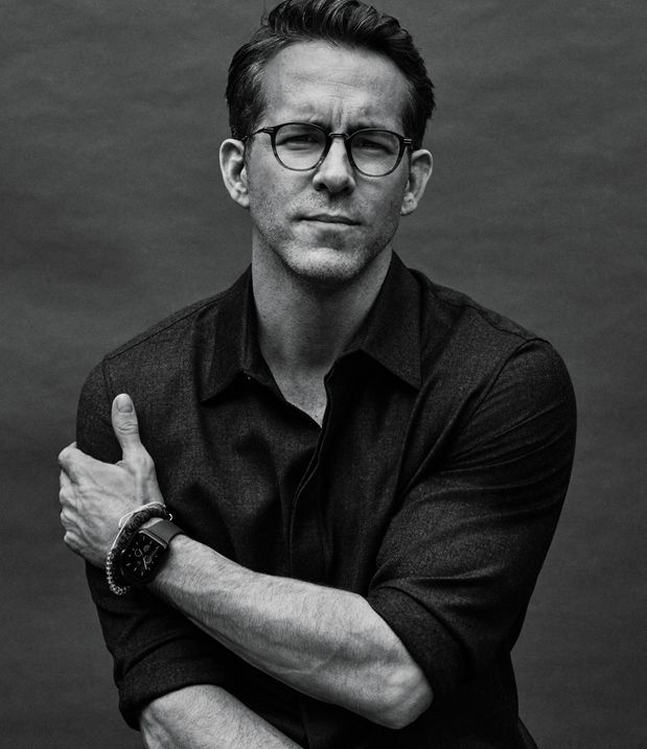
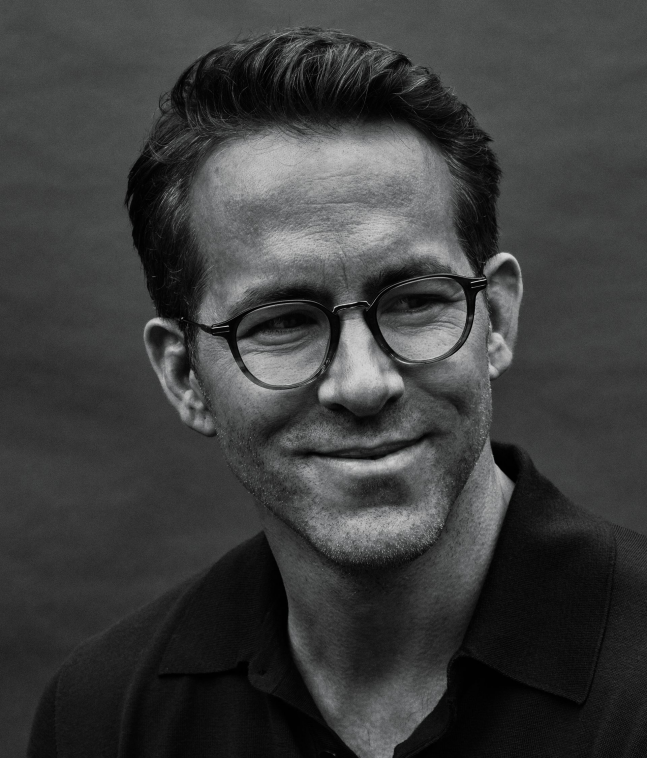
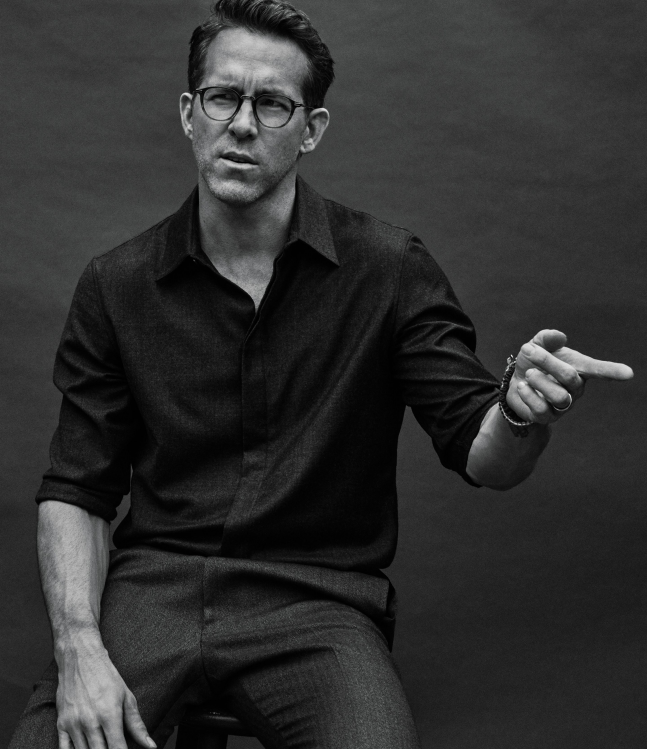
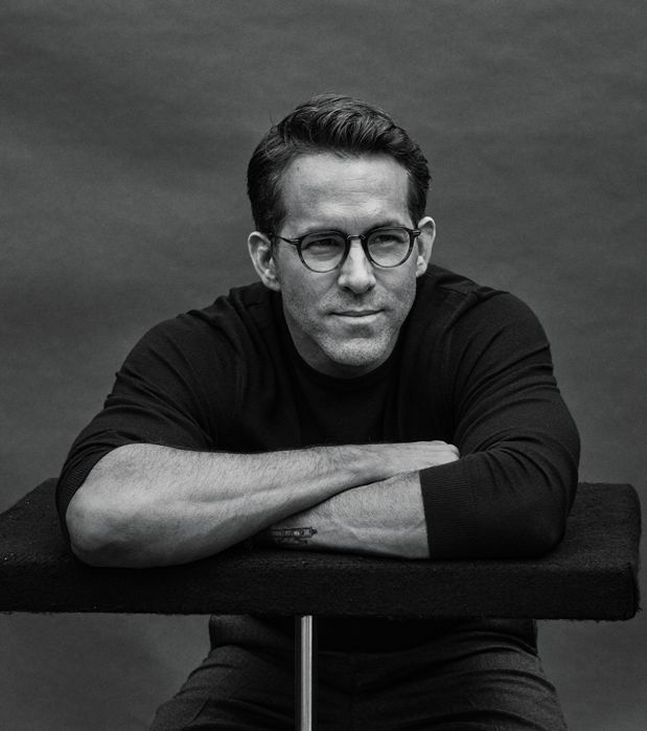
From the Wall Street Journal, November 2021 Don’t put that on. That Deadpool mask will offer you zero protection,” Ryan Reynolds says, seeing me eye the burgundy-and-black superhero face covering displayed on a credenza behind him. “Actually, that mask will probably give you an STD.” His broad smile falls away, replaced with a grave countenance. “No, really,” he says, sotto voce. “You will catch something. I did.” |
|
|
| Reynolds’s closest collaborators marvel at his willingness to work. Paul Wernick, his co-writer and co–executive producer on the Deadpool franchise, says: “He lives in a world where his days are 50 hours long. He commits full force to a project and wills it to succeed.” Gadot, his Red Notice co-star: “He gives 200 percent to everything in the most nonchalant way.” Shawn Levy, his director on Free Guy and The Adam Project, says Reynolds refuses to rest on his superstar status: “His work ethic is so disproportionate to what he could get away with. The guy hustles nonstop.” “I tend to bite off way more than I could or should chew,” Reynolds says. “I think maybe it’s just that Canadian sensibility: ‘Well, I said I was going to, so I have to deliver this.’ I will do that at the cost of my own well-being sometimes.” In late May, near the end of Mental Health Awareness Month, Reynolds took to social media to share with his tens of millions of followers that he suffers from anxiety. His “longtime pal,” as he called it, has traveled with him since childhood, though pressures of his professional life amplified it. “I fixate on things,” he says. “That’s sort of the engine of anxiety. I lay awake at night, wrapping and unwrapping every possible scenario. I slept at a perfect right angle for so many years.” However, he’s actively trying to manage the issue through meditation and a conscious effort to be mindful. “I tend to pave over anxiety with work and, to a lesser extent, achievement,” he says. “You want to tick boxes sometimes. So these days, my goal is to be as present as I can and not just tick a box just to do it. I’m fully embracing and living that right now. It’s been amazing.” He makes a check mark in the air. “OK,” he says, “heartfelt personal-growth quote: check.” Reynolds grew up in Vancouver, British Columbia. His mother was a retail saleswoman, and his father, a retired Canadian Mountie, worked as a food wholesaler. Early on, Reynolds learned to use humor to defuse his dad—a “skin-covered land mine” with whom “you never knew when you were going to take a wrong step, and he was just going to explode”—and to push back against his older brothers. As the youngest of four boys, he packed more impact with his punch lines than his punches. “You’re not going to get by on your biceps. You’re going to get by on your wit,” he says. At 12, Reynolds was cast in the Canadian teen drama Hillside and then landed spot parts in a handful of TV shows and movies shot in British Columbia. Nevertheless, after high school, his primary role was that of an overnight stock boy at the local Safeway. He enrolled at a college in Vancouver but, 45 minutes into his very first class, left for good. The next day he departed for Los Angeles, sure he would joke his way into The Groundlings, unaware that the storied comedy troupe required a long course of study. Reynolds had neither the money, time nor visa status to take improv classes, so he improvised. To get a work permit, he would have to land not just a guest spot but a starring role. After a series of fruitless meetings, Reynolds took a different tack at one talent agency: “I bullshitted them and said, ‘If you send me on five auditions, I swear to God, I’ll get one.’ ” |
|
|
| Much to Reynolds’s surprise, one audition led to him being cast in a pilot and then a lead in the ABC comedy Two Guys, a Girl and a Pizza Place (later shortened to Two Guys and a Girl). Reynolds had already surpassed his loftiest aspirations. “The empyrean heights I was reaching for,” he says, “were just to be a wacky neighbor in a sitcom.” After the series’ four-season run, Reynolds embarked on a meandering movie career, bouncing between various avatars: comedy Reynolds (Van Wilder, Just Friends, The Change-Up); action-movie Reynolds (Blade: Trinity, X-Men Origins: Wolverine, Safe House); rom-com Reynolds (Definitely, Maybe; The Proposal); dramatic Reynolds (Buried, Woman in Gold, Mississippi Grind); and quirky independent film Reynolds (Waiting…, Adventureland). There was an earlier abortive effort to launch big-budget blockbuster Reynolds with Green Lantern, the 2011 bomb that remains the target of his ridicule. “While I was obscenely privileged to star in movies, a lot of times they weren’t working,” he says. “That’s when I said, ‘I need to have some authorship here. Because I have a sense of how to do this in a way that will work.’ ” Reynolds had been developing a film based on the Marvel Comics character Deadpool since 2004, and he ended up co-writing the film. “We probably pulled that thing apart and rewrote it 600 times,” he says, referring to his co-writers Wernick and Rhett Reese. “Make it PG-13, back to R, back to PG-13. Add this, take away that…. It was just maddening.” As time passed, Reynolds’s sense of urgency mounted. “There was no option for failure,” Wernick recalls. “He was at a point in his career with Deadpool that he absolutely needed it to work. He knew this was his quote-unquote last chance.” Eventually, Reynolds convinced studio executives to allow him to shoot a few minutes of test footage. That brief glimpse of Reynolds’s ribald, snarky and sly send-up of superhero tropes was leaked and became a viral sensation. Reese, who witnessed Reynolds unchained, improvising one alternate line after another, wasn’t surprised. “He has the ability to take a performance and stretch it in different directions like it was made of Silly Putty,” he says. “I remember getting goose bumps and thinking, Wow, we have a secret weapon of mass destruction in our hands here.” Encouraged by fans, the studio greenlit Deadpool, though with a budget a fraction of the size of most superhero films. Released in 2016, the film was an instant hit and became the highest-grossing R-rated movie of all time, a record it later ceded to 2018’s Deadpool 2. |
|
|
| “Deadpool was a dispensary of so many invaluable life lessons. The first and foremost being: Necessity is the mother of invention,” Reynolds says. “We had so little to make that movie and even less to market the movie. And the character was so unconventional, so marketing it had to step outside any semblance of normalcy.” That it did, eschewing clips in favor of culturally knowing, stand-alone bits of content (e.g., a parody PSA about testicular cancer self-exams; Betty White delivering a bleeped-out review of the film). Reynolds kept a costume and did appearances in character, including one in which he gave a towel-clad Conan O’Brien a massage. He posed as Deadpool in front of a fire on a bearskin rug, aping Burt Reynolds’s nude centerfold in Cosmopolitan. At Super Bowl 50 weekend in 2016, Reynolds dished out chimichangas, Deadpool’s favorite food, from a taco truck. |
When Reynolds launched his production company, Maximum Effort, in 2018, he took the unusual step of hiring a marketing exec to run it—George Dewey, with whom he collaborated on the Deadpool campaign. It soon expanded into marketing after Reynolds became an owner of Aviation Gin and Mint Mobile. “If Ryan had a master plan all along, he did a great job of hiding it,” Dewey says. “All he’s trying to do is to make things that bring a little joy, fun or unexpectedness into people’s lives.” As integral as Reynolds’s marketing efforts were to the success of Deadpool and its sequel, they may have been more so to Free Guy. The film was scheduled to come out in July 2020, then, in the face of the pandemic, was postponed multiple times. Reynolds produced some 75 pieces of original promotional content (10–15 is typical for a lead actor), whose tone evolved from escapism—the campaign launched when Donald Trump was president—to the feel-good sentiments underpinning the story of Guy, a non-player character (NPC) within a videogame who levels up to save his world. It’s a heartfelt hero’s journey—albeit one awash in violence, pop-cultural references and cameos. Shawn Levy had read the script in 2016 and passed, seeing it as a movie about gaming. Reynolds saw something more profound. “Ryan said, ‘I’m interested in the videogame premise only as a hook. The movie I care about is an allegory for personal empowerment in a cynical world—about the yearning to step out of the background and to have agency in their own life and world,’ ” recalls Levy. “That’s what moved me from a no to a yes almost instantly.” |
|
|
| As the Reynolds and Gadot families formed a Covid pod on location, he would pitch jokes for her character, a more accomplished rival art thief, and rework dialogue and text with the Wonder Woman star. “He keeps everything alive and electric,” she says. “His brain’s always working on how to make it better, more delightful, funnier.” On the other end of the spectrum, Reynolds took on producing, writing (uncredited) and starring in The Adam Project. Although the movie takes audiences on a laugh-filled adventure, it took Reynolds “to a place that I was never expecting I would ever go in a movie.” The high-concept time-travel film forced him to reflect on his father and his own mythmaking. “He was a very tough guy,” Reynolds says of his late father, who died of Parkinson’s disease in 2015. “He had kind of an Archie Bunker kind of mentality about him, which for me, as an incredibly sensitive kid, was tough. But at the end of the day, I think I put the monster makeup on him, and I don’t know that that was fair. These stories that we tell ourselves—we can fictionalize memories to fit our own narrative. Like, ‘I’m a funny guy because my dad was an a—hole.’ But that’s not true. I’m not funny.”
While Reynolds says he’d be thrilled to “pull a Betty White” and tell naughty jokes into his 90s, he’s not counting on it. “I will not be a movie star at some point,” he says. That thinking informs his planning for the Group Effort Initiative, a diversity and inclusion program funded out of Reynolds’s salary that gives BIPOC and other marginalized people, who have been historically underrepresented in the entertainment industry, tangible work experience on his upcoming productions. “Right now, I’m in a position of unspeakable privilege, where I can enact something like this. At some point, I will not be,” Reynolds says. “So the hope is that you’re creating a template so that it becomes sustainable.” After he introduced the initiative on The Adam Project, several studios and networks adopted the model. |
|
|
| Beyond what’s imminent, Reynolds is hesitant to speculate. “The future is going to be…. Look at this!” Reynolds says, as his youngest daughter pushes through the door, saying “Hi, Dada.” Following the toddler into the room is Lively, dressed in designer sweats and a chambray shirt. “She was begging to see you,” she says to Reynolds, “and she’s about to go to bed.” Indeed, the light is fading, but Reynolds seems energized, picking up his daughter and nuzzling her as she pushes on his nose. “The future?” Reynolds continues after a moment. “I’m going to put this one to bed. Then when I put myself to bed, I’ll lie awake.” |

|
|
|
|
|
 |
|
These playlists are constantly updated and videos may be reordered as I see a better placement |
Sunday, October 31, 2021

Subscribe to:
Post Comments (Atom)
No comments:
Post a Comment